Activities of Daily Living (ADL) Support
Structured physical and practical assistance with basic (ADLs) and instrumental (IADLs) daily activities to maintain comfort, autonomy, and routine in the home.
Summary: What is Activities of Daily Living (ADL) Support?
Activities of Daily Living (ADL) support encompasses fundamental self-care tasks essential for independent survival. Morning Glory provides personalised assistance with the six core ADLs (eating, bathing, dressing, toileting, transferring, and maintaining continence) combined with instrumental activities (IADLs) to ensure seniors live safely at home.
Understanding Activities of Daily Living (ADL) Support
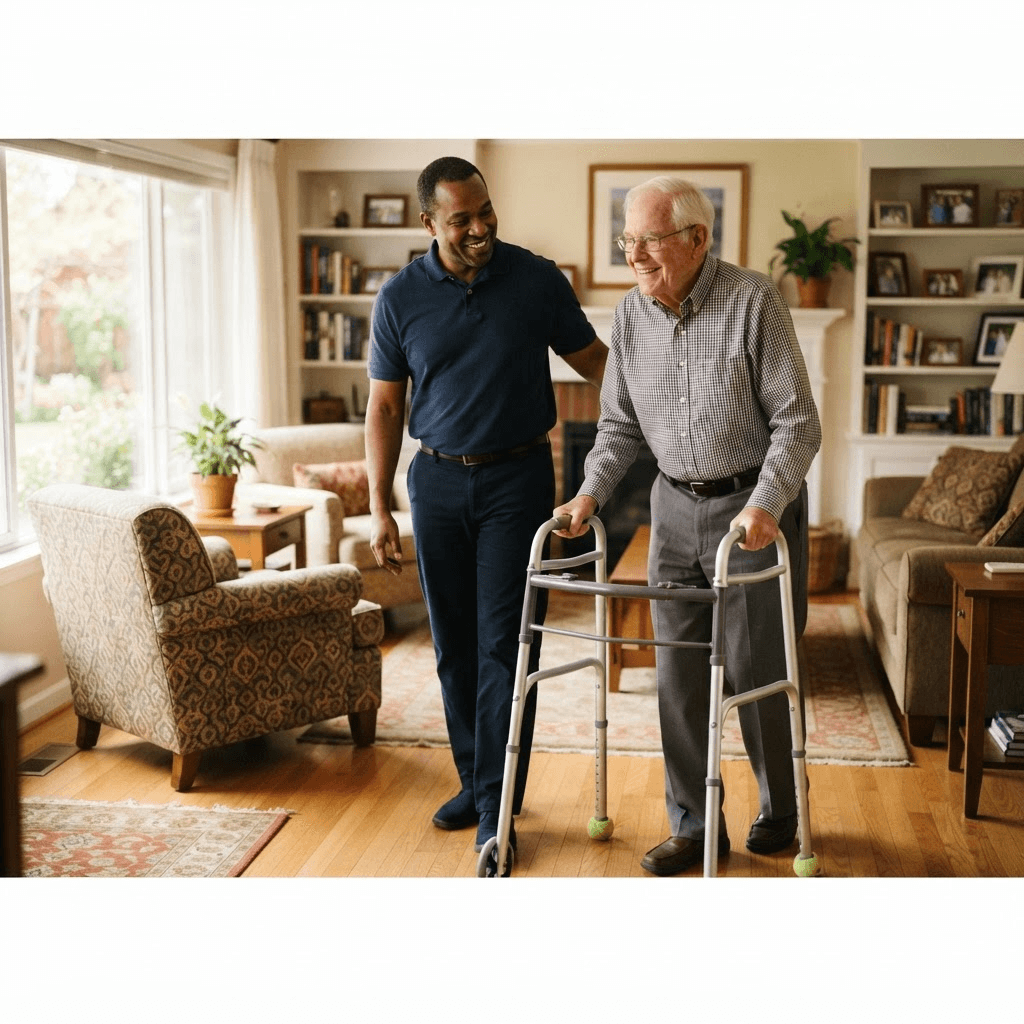
Activities of Daily Living (ADLs) are the standardized functional metrics healthcare professionals use to determine a person's ability to live independently without assistance. When age, injury, or degenerative conditions impair these core capabilities, Morning Glory provides compassionate, one-on-one physical assistance and structural pacing to bridge the gap between complete dependence and safe home living.
Clinical Context & Evidence-Based Framework
Utilizing the validated Katz Index of Independence in Activities of Daily Living and the Lawton Instrumental Activities of Daily Living (IADL) Scale, Morning Glory structures care plans that encourage active participation. We avoid unnecessary over-assistance, which can accelerate muscle atrophy and loss of confidence, focusing instead on restorative support that preserves functional autonomy.
What Our Activities of Daily Living (ADL) Support Includes
Restorative ADL Support That Protects Functional Autonomy
Our philosophy for Activities of Daily Living (ADLs) centers on restorative enablement rather than passive dependency. We provide just the right degree of physical steadying, sequencing cues, and adaptive equipment assistance so seniors can actively participate in their daily rituals. By reinforcing functional strengths rather than taking over completely, we help clients retain muscle memory, joint flexibility, and personal agency.
Preserving Muscular Strength & Physical Capability
By utilizing hand-over-hand assistance and encouraging client participation, we prevent the rapid muscle deconditioning that occurs when individuals become entirely passive recipients of care.
Predictable Daily Routines & Cognitive Clarity
Consistent daily rhythms for waking, grooming, dining, and resting anchor the body's internal clock, reducing cognitive fatigue, disorientation, and sundowning agitation.
Mastery of Adaptive Daily Living Tools
Caregivers guide clients in comfortably using adaptive aids (including button hooks, long-handled reachers, and ergonomic dining utensils) to restore self-reliance.
Long-Term Retention of Home Independence
Maintaining mastery over daily living activities allows seniors to remain securely in their own familiar home environment, preserving community connections and cherished routines.
Transparent Family Engagement & Functional Milestone Tracking
Watching an aging parent or spouse face challenges with basic daily tasks can be emotionally difficult. Morning Glory keeps families completely informed with objective functional observations, collaborative care goal adjustments, and proactive coordination with physical and occupational therapy teams.
Objective Functional Capability Tracking
We document ADL progress over time, giving family members clear data on physical stamina, balance improvements, and areas where adaptive equipment can further enhance safety.
Therapy Alignment & Care Plan Continuity
When home health physical or occupational therapists prescribe specific movement protocols, our caregivers reinforce proper posture and techniques during daily routines.
Relief from Constant Caregiver Worry
Family members gain immense peace of mind knowing a qualified caregiver is ensuring their loved one is safely dressed, well-nourished, and steady on their feet every day.
Dynamic Care Level Calibration
As functional abilities improve after rehabilitation or fluctuate during illness, we collaborate with families to scale care hours up or down dynamically.
Who May Benefit From Activities of Daily Living (ADL) Support?
- Seniors noticing progressive difficulty completing morning and evening routines
- Individuals experiencing decreased grip strength, fine motor tremors, or severe arthritis
- Adults recovering from hospital stays who need transitional re-conditioning
- Families seeking structured daily oversight to prevent premature assisted living placement
- Individuals living with cognitive impairments requiring cueing and sequencing guidance
How We Implement Your Activities of Daily Living (ADL) Support Care Protocol
Functional Capacity Assessment
A thorough evaluation of physical reach, balance, dexterity, and endurance across all daily routines.
Targeted Routine Mapping
We design a schedule aligning with the client's lifelong habits, establishing consistent morning, midday, and bedtime support milestones.
Adaptive Independence Support
Caregivers provide hand-over-hand assistance and verbal sequencing cues to foster maximum personal capability.
Monthly Functional Tracking
We review progress and adapt support levels in response to physical therapy recommendations or changing medical needs.
Safety Protocols & Quality Controls
- Ergonomic lifting and pivot-transfer protocols following OSHA healthcare standards
- Frequent hydration tracking to prevent dehydration-induced delirium and weakness
- Continuous observation of gait instability and environmental trip hazards
Frequently Asked Questions About Activities of Daily Living (ADL) Support
What is the difference between basic ADLs and IADLs?
How do you decide how much help someone needs with ADLs?
Can ADL support help someone stay out of a nursing home?
Request Activities of Daily Living (ADL) Support
Connect with our care coordinators to discuss a personalized care plan tailored to your loved one's daily routine.